Modern summer blockbusters owe a debt to 1984 movies. The release calendars, marketing strategies, and expectations we associate with big summer movies were cemented during that season.
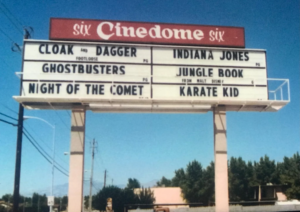
Throughout that summer, theaters had lines that were sooooo long, they wrapped around the buildings. When Gen X audiences talk about the golden age of summer films, they’re often thinking about 1984 movies, whether they realize it or not.
That summer didn’t just entertain us. It changed Hollywood forever.
The summer of 1984 represents a high-water mark for theatrical moviegoing, when Hollywood, audiences, and timing aligned perfectly. It wasn’t just luck, it was scale, money, and shared experience, all colliding at once.
A Perfect Storm for Blockbusters
By 1984, the modern blockbuster formula was fully formed. Studios had learned lessons from Jaws and Star Wars in the late ’70s, refining wide releases, saturation marketing, and summer scheduling. But what made 1984 movies unique was how many major hits arrived at once, and how broad their appeal was. You could be twelve or forty-two and find something that felt made just for you.
- May 4- Sixteen Candles
- May 11- The Natural
- May 23- Indiana Jones and the Temple of Doom
- June1- Start Trek 3, The Search for Spock
- June 8- Ghostbusters AND Gremlins, (The cult fave ‘Beat Street’ also premiered June 8)
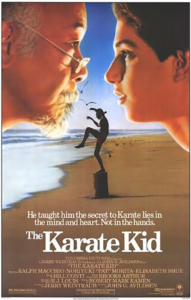
- June 22- Karate Kid
- June 29- Cannonball Run 2
- July 20- The Neverending Story AND Revenge of the Nerds
- July 27- Purple Rain
- August 10- Red Dawn
The Movies That Defined the Summer
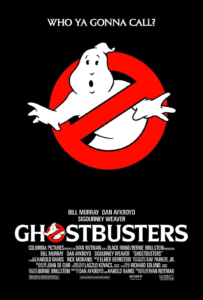
- Ghostbusters
Released in June, Ghostbusters became the defining movie of the summer. It blended comedy, science fiction, and supernatural elements in a way audiences had never seen. The theme song played everywhere, quotes entered daily language, and repeat viewings were common. It went on to earn nearly $300 million worldwide, a staggering number for the time. Ray Parker Jr’s theme song spent 3 weeks at number 1 on the billboard chart (aug11-aug 25, 1984)
- Indiana Jones and the Temple of Doom
As a prequel to Raiders of the Lost Ark, this darker installment packed theaters with fans eager for another Indiana Jones adventure. It helped solidify the franchise as one of the most reliable box-office draws of the decade. - The Karate Kid
This wasn’t just a movie—it was a movement. Kids signed up for karate classes in droves. Underdog storytelling, mentorship, and a crane kick made it one of the most beloved 1984 movies, earning over $130 million worldwide on a modest budget.
- Gremlins
Darker than expected and wildly original, Gremlins surprised audiences and studios alike. Its mix of cute and chaotic pushed boundaries and helped lead to the creation of the PG-13 rating.
Lines Outside the Theater Weren’t an Exception—They Were the Norm
What’s easy to forget today is how physical and analog moviegoing was in 1984. No reserved seating. No online ticketing. If you wanted in, you waited.
Friday nights and weekend afternoons meant:
- Long lines spilling into parking lots
- Sold-out signs taped to ticket windows
- Parents dropping kids off and circling back later
These movies existed outside of the theater as well. At work, or with their neighbors and friends, people talked about trailers, said “wax on, wax off” ad nauseam, debated which movie was better, sang soundtrack songs, and shared anticipation. 1984 movies were events, not just content.
A Financial Explosion for Hollywood
From a business perspective, the summer of 1984 was a revelation.
- Multiple films crossed the magical $100 million domestic threshold.
- 3 > $100 million-Ghostbusters, Indiana Jones, Gremlins. Karate Kid just fell short at $90 million.
- Several had relatively modest production budgets, creating enormous profit margins
- Merchandising, soundtracks, and home video (still emerging) multiplied revenues
- The Purple Rain soundtrack STILL makes money, over 40 years later.
- Ecto Cooler, from Hi-C was hybrid marketing at its finest.

Studios realized that a well-timed summer release could anchor an entire fiscal year. The success of 1984 movies reinforced:
- The power of star actors
- The value of strong opening weekends
- The importance of mass-appeal storytelling
- The bankability of sequels
Hollywood didn’t just enjoy the summer, it restructured itself around it. And we, the moviegoer also restructured our expectations based on the summer of 1984 movies.
Remember When Original Ideas Still Ruled?
One of the most striking aspects of 1984 is how many hits were not sequels or remakes. Ghostbusters, The Karate Kid, and Gremlins all began as original concepts.
1984 was a time when audiences rewarded creativity. Movie goers showed up in massive numbers for stories they hadn’t seen before, proving that originality could dominate the box office when paired with strong execution.
But unfortunately, that lesson was quickly forgotten on our path to constant sequels/remakes/reboots and nonstop super-hero franchises.
Why 1984 Movies Still Matter Today
Looking back, 1984 movies represent something increasingly rare: a shared national experience. Everyone seemed to see the same films at the same time. Scenes and quotes spread by word of mouth. Soundtracks ruled radio airwaves. Movie posters were cultural signals. Hollywood was firing on all cylinders.
Financially, the summer of 1984 proved that movies weren’t just entertainment—they were economic engines, capable of driving billions in revenue. Culturally, it showed the power of storytelling to unify people, even briefly, around common characters and moments.
1984 was a glorious time for movie goers. Unfortunately, given the nature of today’s movie industry, we will never see another summer like we had in 1984.